
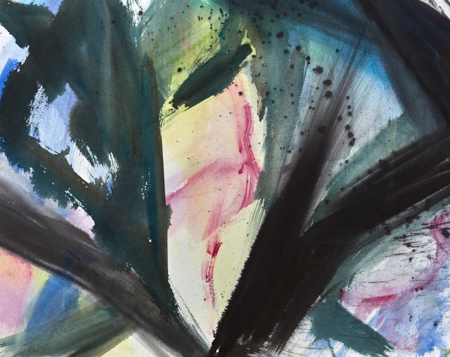
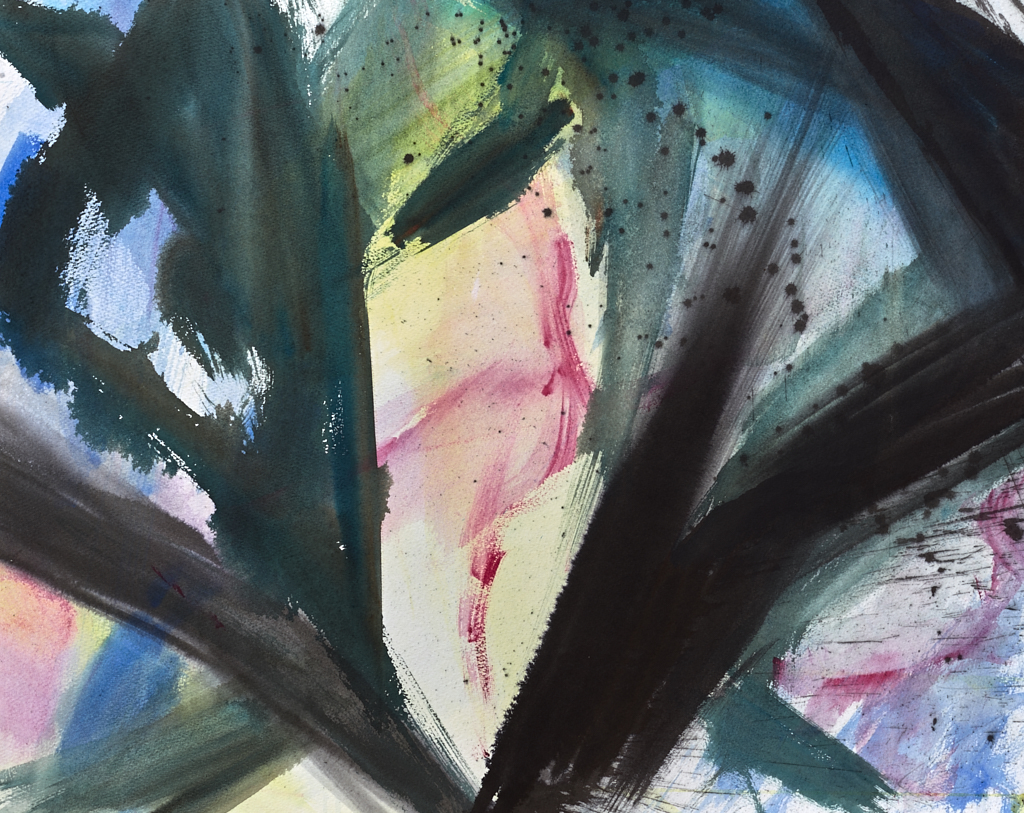
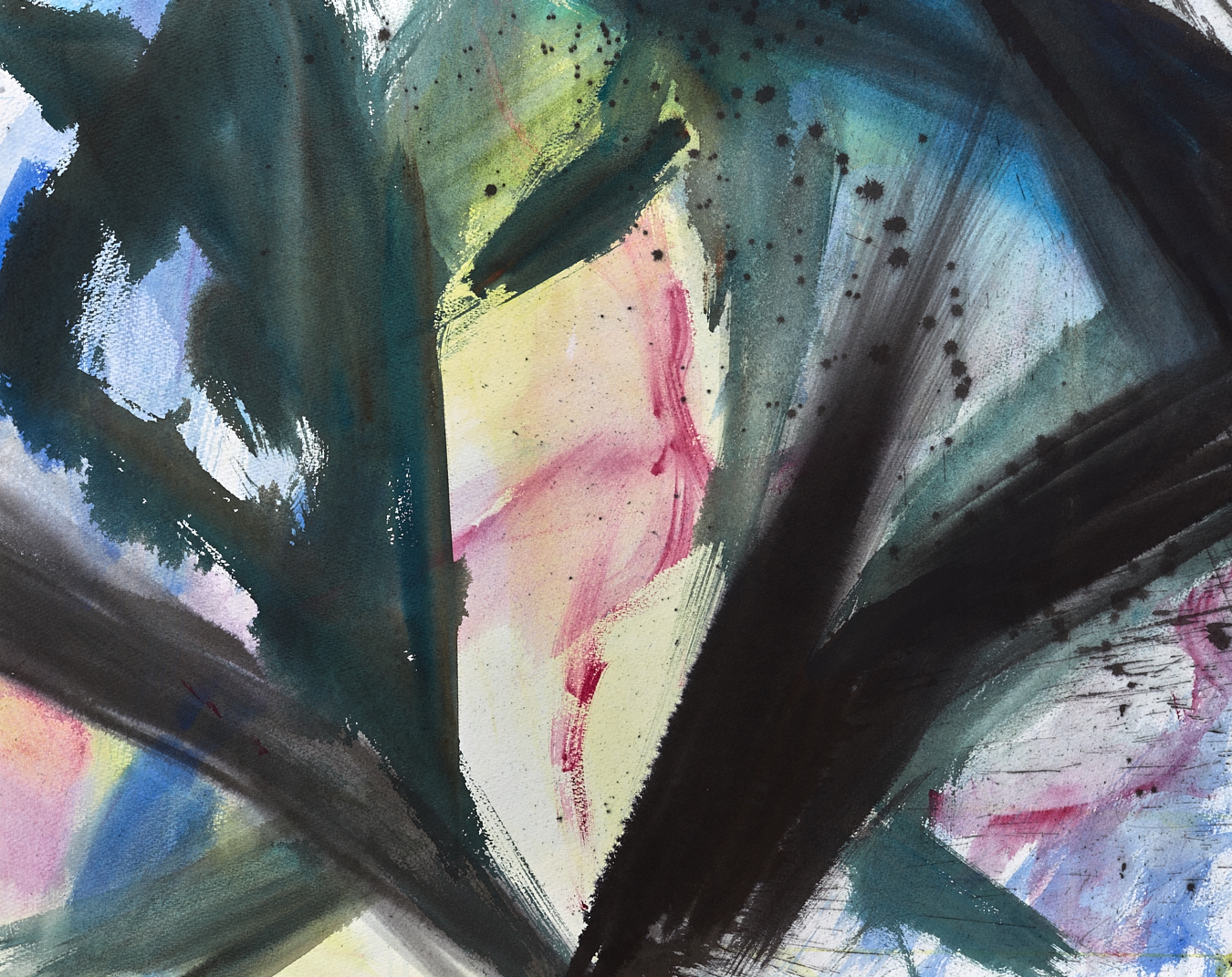
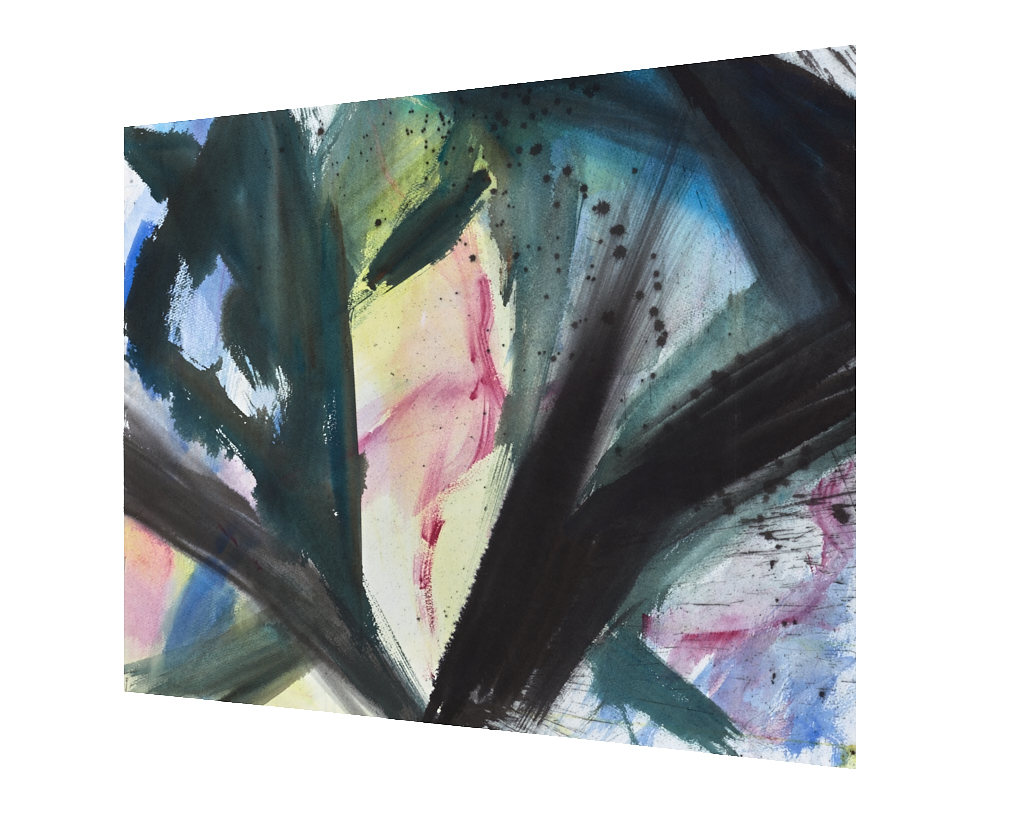
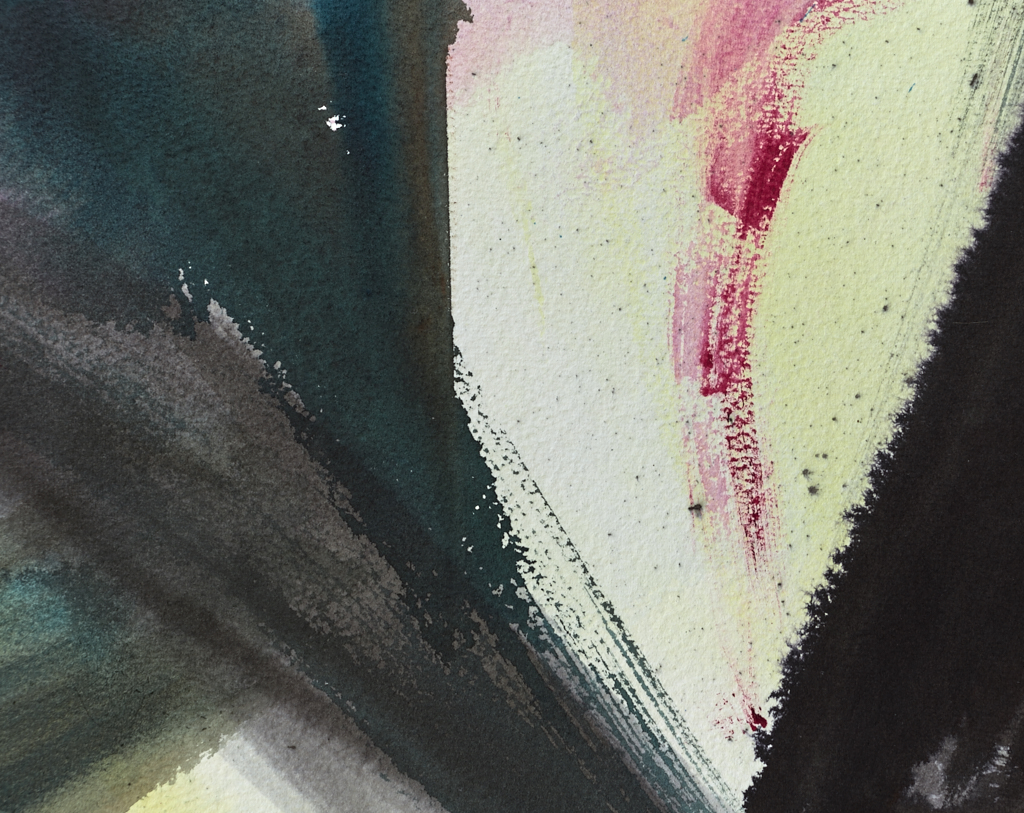
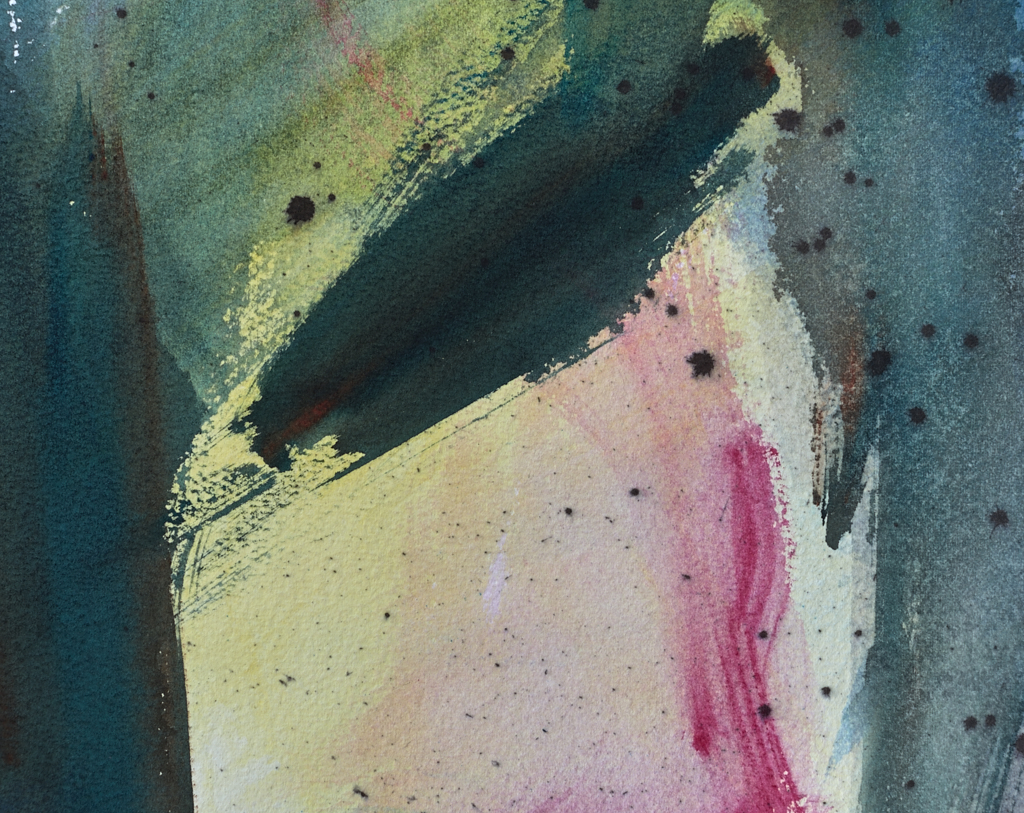
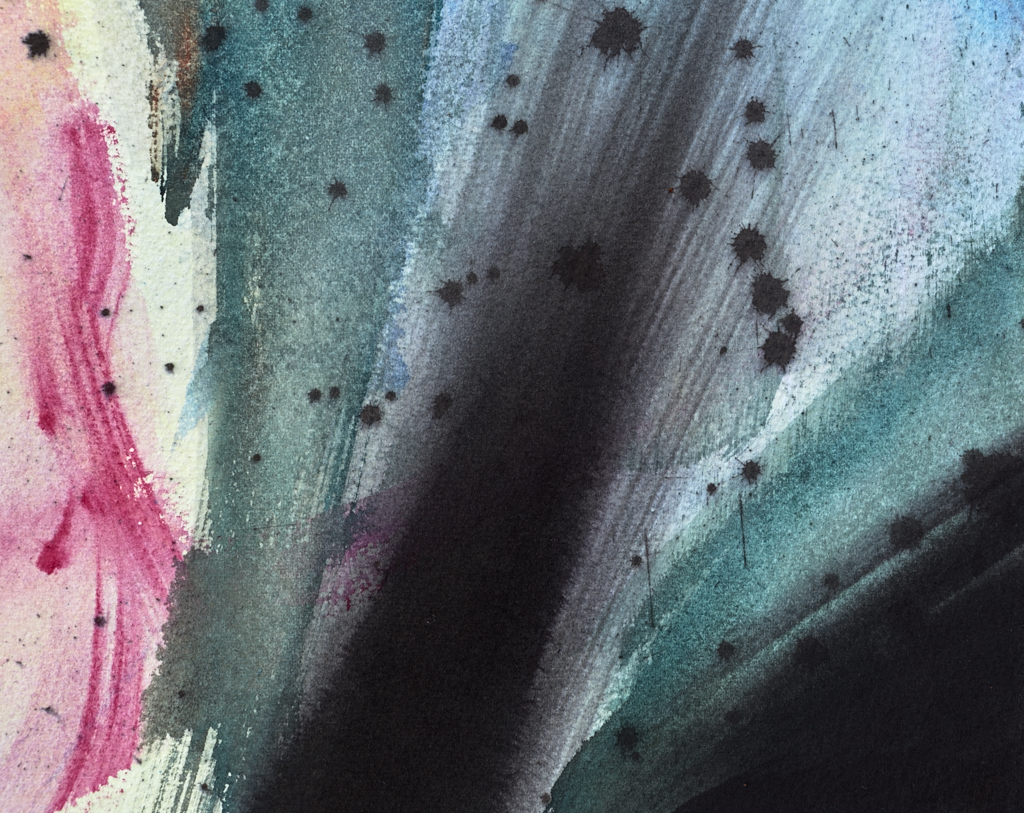
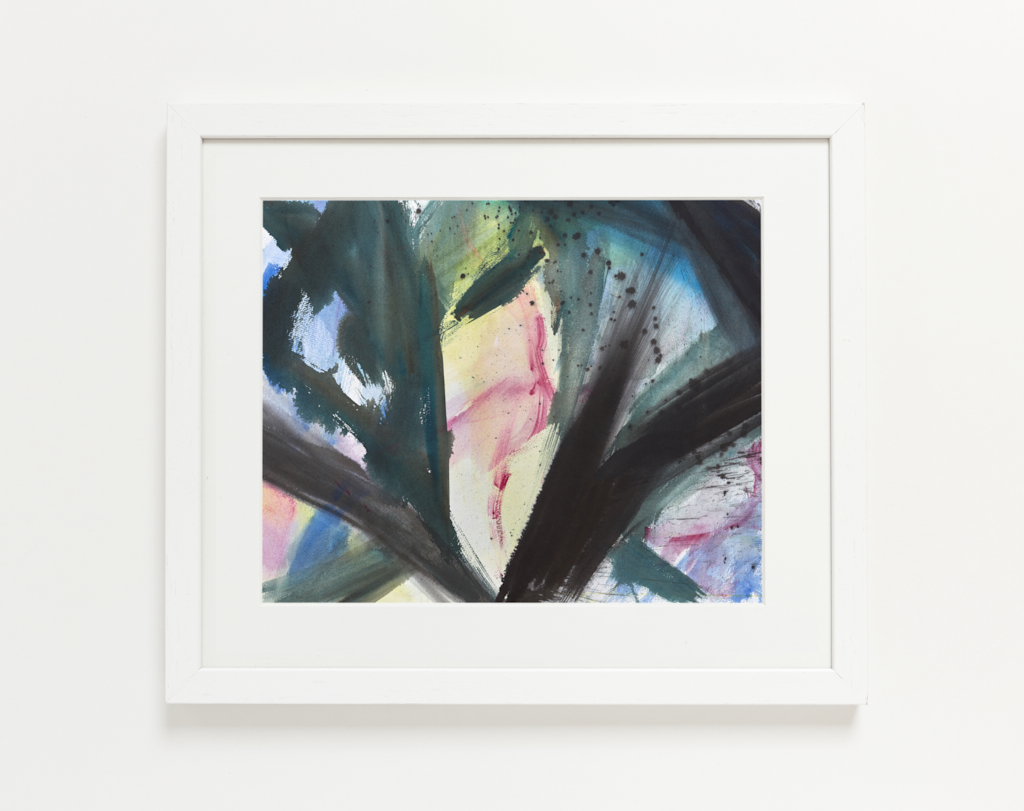
Press of Light is an original abstract painting in watercolour and ink on paper by UK artist Timothy Gent. Concentrated areas of deep blue and black are set against luminous passages of turquoise, yellow and pink, creating a shifting balance between density, light and open space.
A lighter passage emerges at the centre of the composition, becoming one of the painting's most active elements. It is surrounded and partly enclosed by darker forms, creating a sense of pressure and containment, while the colour appears to push back into the surrounding structure. The resulting tension gives the painting its distinctive sense of energy.
Watercolour provides much of the painting's depth and atmosphere. Transparent washes, softened edges and areas of pooled pigment allow earlier marks and the surface of the paper to remain visible, while ink introduces sharper lines, fragments and splashes. The two mediums retain their contrasting qualities, allowing fluidity and definition to exist together.
The composition is structured around opposing movements. The eye is drawn towards the luminous central passage before being redirected by the darker marks around it. Small areas of turquoise and pink punctuate the denser passages, creating changes of pace and emphasis across the surface.
The title Press of Light refers to this tension between containment and release. The lighter area can appear held within the darker forms, yet also seem to exert a quiet force of its own. The painting deliberately leaves that relationship open rather than resolving it into a fixed interpretation.
Relatively intimate in scale, Press of Light rewards close and sustained viewing. Subtle variations in pigment, transparency and mark-making gradually emerge across the surface, giving the painting a presence that develops with attention.
Press of Light is signed, titled and dated by the artist and supplied with a signed Certificate of Authenticity.
Painted in watercolour and ink on Daler-Rowney The Langton Prestige 300gsm (140lb) 100% cotton watercolour paper. The paper is secured around the edge throughout the painting process, leaving small staple holes around the perimeter. When framed, approximately 1 cm of the outer edge of the paper may be concealed.